
God’s Rejects: May 15-21, 2019 (Wed-Tues): Read through Judges, 1 Samuel, and 1 Corinthians

Here are some of the scariest words in the Bible: “But he did not know that the Lord had left him” (Judges 16 in The Christian Standard Bible). Samson, the strong man used of God, thought that he’d respond as he’d done before, but his God-given strength was gone. How often have Christians forsaken God in devotion, morality, and principle and then continued on in rebellion or worse, in a Pharisaical Christianity, never realizing that God’s blessing on their lives has departed. They’re operating in their own power for their own kingdom to prop up a façade of Christianity. We can’t deny that God used Samson in the middle of his flaws and even capitalized on those flaws at times (Judges 14:1-4), but that’s no excuse to wallow in sin and corruption.

King Saul was another God-follower who had a hard time choosing to follow God over fears and appearances. He became impatient and took things into his own hands (1 Samuel 13:7-14), and later he decided to amend God’s commands for his personal interests (1 Samuel 15:1-35). I’ve done it, too. I’ve been the Pharisee. I’ve been impatient in the things of God. I’ve rewritten the commands of God to my own liking. What about you?

Regarding God’s rejection, true and sincere repentance is the only solution coupled with calls upon the mercy of God. Of course, God makes the choice whether to use us again or not. He chooses to use whom He wills. It’s a privilege to be His instrument, and we must remain pliable in His hands, walking in His ways for His glory not ours. Although Samson was used of God at the end of his life, he walked a rejected and dejected life for a while. I don’t want to end up in the God’s Rejects Club in the company of King Saul, Judas, Ananias and Saphira, Esau, and Cain. I want to finish well in the company of Abraham, Moses, Paul, John, and Jesus.

This week you’ll read…

Judges 15-21: “He called out to the Lord: ‘Lord God, please remember me. Strengthen me, God, just once more. With one act of vengeance, let me pay back the Philistines for my two eyes.’ Samson took hold of the two middle pillars supporting the temple and leaned against them, one on his right hand and the other on his left. Samson said, ‘Let me die with the Philistines.’ He pushed with all his might, and the temple fell on the leaders and all the people in it. And those he killed at his death were more than those he had killed in his life.” (Judges 16 in The Christian Standard Bible).

1 Samuel 15-21: “But the Lord said to Samuel, ‘Don’t judge by his appearance or height, for I have rejected him. The Lord doesn’t see things the way you see them. People judge by outward appearance, but the Lord looks at the heart.’” (1 Samuel 16 in The Christian Standard Bible).

Psalms 61-65: “God, you are my God; I eagerly seek You. I thirst for You; my body faints for You in a land that is dry, desolate, and without water. So I gaze on You in the sanctuary to see Your strength and Your glory. My lips will glorify You because Your faithful love is better than life.” (Psalm 63 in The Christian Standard Bible).

1 Corinthians 15-16: Recently, I was watching an edited version of a newer Sherlock Holmes movie in which Mr. Holmes seems to imply that his investigation gave an unsupernatural explanation to the resurrection of Christ. He says, “In fact, I may well have reconciled thousands of years of theological disparity.” Sadly, some people in the real world, too, lack the faith to believe in the one true God and His miraculous workings in our world. Specifically, they don’t believe that Jesus Christ rose from the dead. Christianity hinges on the resurrection, but our faith in the resurrection doesn’t make the resurrection so. Because it is so and because we believe in Christ and His resurrection, this makes our faith real and true. “And if Christ has not been raised, your faith is worthless; you are still in your sins.” (1 Corinthians 15 in The Christian Standard Bible).

MSG are daily readings linked to The Message Bible on BibleGateway.com.

CSB are daily readings linked to The Christian Standard Bible on BibleGateway.com.

NLT are daily readings linked to The New Living Translation on BibleGateway.com.

God’s Promises: May 8-14, 2019 (Wed-Tues): Read through Judges, 1 Samuel, and 1 Corinthians

A person’s word used to be his bond. A business transaction could be sealed with a handshake, but in today’s world, 100-page contracts can be insufficient to keep an agreement together. Oftentimes, a man’s word goes as far as the next word out of his mouth. Who can you trust anymore? Of course, there are many people who hold to their word even when it gets painful, and there is always Someone who keeps His word. The Lord is dependable. The Lord keeps His promises.

Think of a time in which you were in the middle of a really difficult circumstance? What helped you make it through? You may come up with a number of answers, and one of those may be hope—hope in the promises of God. Your bank account may prove unreliable. Your relatives may turn out to be less than trustworthy. Your spouse or best friend may end up being less than ideal, but there is a God who is always there. There is a God (and only one) who keeps His promises.

In Judges 13 in the midst of Israel’s running off from God and subsequent suffering under God’s discipline at the hands of the Philistines, the wife of a man named Manoah was visited by the Angel of the Lord. She was barren but was told that she would conceive and bear a son. The Angel of the Lord affirmed this promise to Manoah, and in time the couple was expecting a baby and then had a boy named Samson. Anyone could have given a positive message to the couple about her womb opening and her becoming pregnant, but only God has the ability to give the message and cause it to happen. We can make promises and be thwarted in carrying them out, but I’m not advocating us stopping trusting everyone. However, only God is the truly ultimately trustworthy Person on whom we can rely. Don’t let anything or anyone get in the way of your trust in God and reliance upon His promises.

This week you’ll read…

Judges 8-14: “The angel of God appeared to her and told her, ‘I know that you are barren and childless, but you’re going to become pregnant and bear a son.’ …The woman gave birth to a son. They named him Samson. The boy grew and God blessed him”(Judges 13 in The Message Bible).

1 Samuel 8-14: “When Samuel heard their demand—‘Give us a king to rule us!’—he was crushed. How awful! Samuel prayed to God. God answered Samuel, ‘Go ahead and do what they’re asking. They are not rejecting you. They’ve rejected Me as their King.’” (1 Samuel 8 in The Message Bible).

1 Corinthians 8-14: “Now these three remain: faith, hope, and love ​— ​but the greatest of these is love.” (1 Corinthians 13 in The Christian Standard Bible).

MSG are daily readings linked to The Message Bible on BibleGateway.com.

CSB are daily readings linked to The Christian Standard Bible on BibleGateway.com.

NLT are daily readings linked to The New Living Translation on BibleGateway.com.

God’s Water Cycle: May 1-7, 2019 (Wed-Tues): Read through Judges, 1 Samuel, and 1 Corinthians

Ever gotten stuck in a cycle? When my wife and I were newly married, she worked at a battered women’s shelter for a couple years. One of the things that she learned was that women can get into a cycle of abuse. The abusing husband or boyfriend charms the lady. Tension eventually builds. Then there is an episode of abuse against the woman. The man woos her back in a honeymoon phase of apologies and promises and displays of “love.” Eventually, tension builds again, and there is another act of violence against the woman. Then the abuser draws the woman back again through a honeymoon phase. The woman loves the man and keeps thinking that this time it will be different that he’s changed, and she’s trapped in this cycle of abuse.

Water goes through a cycle on the earth as well. Humor me for a minute as I present a simplistic view of the earthly water cycle. Water falls on the earth as rain. The rain creates run-off as gravity leads water to the lowest point available. The sun heats up the water, causing evaporation. As the water vapor rises in the atmosphere, it cools and attaches to particles in the sky and condenses to form clouds. As the clouds build, they eventually drop their water and rain upon the earth.

In the book of Judges, the Israelites were in a cycle as well, God’s Water Cycle. God would rain down His blessings upon His people. Eventually, they would get their eyes off the Blesser and onto the blessings. They would run off into sin and pursue other gods. God would heat things up for the Israelites by allowing them to become ensnared and enslaved. This would cause them to lift up prayers to heaven in repentance for deliverance. After letting them suffer for a good while, God would come to their rescue, deliver them, and rain His blessings upon them. After which, they would in time run off to pursue other things and gods.

You are on this cycle. Sometimes it’s a simple devotion such as this one which prompts your repentance from a detour. At other times, God may have to use a stronger wake-up call to bring repentance in our lives. I’ve experienced both. Save yourself time and heartache. Listen to the sermon. Heed the soft correction. Listen to that still, small Voice.

So where are you on this cycle?

  • Are you in the middle of a shower of blessings? Keep your eyes on the Blesser.
  • Are you running off? Turn back to the Lord.
  • Are you in the heat of God’s correction or training? Are you in the middle of some catastrophe and discipline of God? Stop resisting God and turn back to Him.
  • Are your prayers rising up to God with a heart of repentance and love?

This week you’ll read…

Judges 1-7: “God’s angel went up from Gilgal to Bokim and said, ‘I brought you out of Egypt; I led you to the land that I promised to your fathers; and I said, I’ll never break my covenant with you—never! And you’re never to make a covenant with the people who live in this land. Tear down their altars! But you haven’t obeyed Me! What’s this that you’re doing? So now I’m telling you that I won’t drive them out before you. They’ll trip you up and their gods will become a trap.” When God’s angel had spoken these words to all the People of Israel, they cried out—oh! how they wept! They named the place Bokim (Weepers). And there they sacrificed to God” (Judges 2 in The Message Bible).

1 Samuel 1-7: Hannah was despondent. She was barren and her husband’s other wife ridiculed her because Hannah had no children, so she went to the tabernacle. “Deeply hurt, Hannah prayed to the Lord and wept with many tears. Making a vow, she pleaded, ‘Lord of Armies, if you will take notice of your servant’s affliction, remember and not forget me, and give your servant a son, I will give him to the Lord all the days of his life, and his hair will never be cut’” (1 Samuel 1 in The Christian Standard Bible).

1 Corinthians 1-7: “Dear brothers and sisters, when I was with you I couldn’t talk to you as I would to spiritual people. I had to talk as though you belonged to this world or as though you were infants in the Christian life. I had to feed you with milk, not with solid food, because you weren’t ready for anything stronger. And you still aren’t ready, for you are still controlled by your sinful nature. You are jealous of one another and quarrel with each other. Doesn’t that prove you are controlled by your sinful nature? Aren’t you living like people of the world?” (1 Corinthians 3 in The New Living Translation)

MSG are daily readings linked to The Message Bible on BibleGateway.com.

CSB are daily readings linked to The Christian Standard Bible on BibleGateway.com.

NLT are daily readings linked to The New Living Translation on BibleGateway.com.

ID: Your Identity in Christ: April 22-30, 2019 (Mon-Tues): Read through Deuteronomy, Joshua, and Ephesians

Everyone has an identity, but how would you identify yourself? Many people identify themselves by what they do. You may be a carpenter, an accountant, a teacher, a preacher, a clerk, or a salesman. I’m not asking what you do. You can change what you do, but you can’t change your identity. I used to be a public school teacher. Now I’m a minister. My mom used to be a beautician and then a school bus driver, but she’s been a nurse for many years now. You can change what you do, but you cannot change your identity. Now don’t start rattling off your social security number. We don’t want any identity theft going on.

Your identity is who you are. So who are you? The two main identity groups in the world are children of the devil and children of God. If you’re a child of God, then you have an awesome identity. Now get a hold of yourself. You can’t take credit for it. God did it. He gave each believer a jaw-dropping identity, and you’ll read about it in this last reading in April.

Ephesians is one of the greatest books of the Bible (in my opinion), and each of its six chapters is power-packed with pieces of your identity in Christ. You want to know who you are? Look below. I’ve personalized these truths from Ephesians. If you’re a believer in Christ, say each one of these with confidence and conviction. Don’t just take my word for it. Read God’s word.

ID: Your Identity in Christ:

If you’re a true believer in Christ, I pray that you will truly grasp your identity in Christ, who you really are, and live in confidence that God has made you this. You’re not hoping to attain this. He has already given you this identity.

This week you’ll read…

Deuteronomy 22-34: “This command that I give you today is certainly not too difficult or beyond your reach. It is not in heaven so that you have to ask, ‘Who will go up to heaven, get it for us, and proclaim it to us so that we may follow it?’ And it is not across the sea so that you have to ask, ‘Who will cross the sea, get it for us, and proclaim it to us so that we may follow it?’ But the message is very near you, in your mouth and in your heart, so that you may follow it. …I call heaven and earth as witnesses against you today that I have set before you life and death, blessing and curse. Choose life so that you and your descendants may live” (Deuteronomy 30 in The Christian Standard Bible).

Joshua 22-24: “Therefore, fear the Lord and worship Him in sincerity and truth. Get rid of the gods your fathers worshiped beyond the Euphrates River and in Egypt, and worship the Lord. But if it doesn’t please you to worship the Lord, choose for yourselves today: Which will you worship—the gods your fathers worshiped beyond the Euphrates River or the gods of the Amorites in whose land you are living? As for me and my family, we will worship the Lord.” (Joshua 24 in The Christian Standard Bible).

Psalms 52-60: “ When I am afraid, I will trust in You. In God, whose word I praise, in God I trust; I will not be afraid. What can mere mortals do to me?” (Psalm 56 in The Christian Standard Bible).

Ephesians 1-6: “Finally, be strengthened by the Lord and by His vast strength. Put on the full armor of God so that you can stand against the schemes of the devil. For our struggle is not against flesh and blood, but against the rulers, against the authorities, against the cosmic powers of this darkness, against evil, spiritual forces in the heavens. For this reason take up the full armor of God, so that you may be able to resist in the evil day, and having prepared everything, to take your stand” (Ephesians 6 in The Christian Standard Bible).

MSG are daily readings linked to The Message Bible on BibleGateway.com.

CSB are daily readings linked to The Christian Standard Bible on BibleGateway.com.

NLT are daily readings linked to The New Living Translation on BibleGateway.com.

A Lover and a Serial Killer: April 15-21, 2019 (Mon-Sun): Read through Deuteronomy, Joshua, Ezra, and Romans

Sin is drop-dead gorgeous, a lover and a serial killer, giving pleasure and then poisoning.

Sin is a mentor and a predator, growing its prey and then pouncing to kill.

Sin is a comforter and a peace-robber, helping mask the pain yet increasing the anxiety.

Sin is an emancipator and an enslaver, throwing off all restraint and then chaining in a prison of bondage and regret.

Sin exudes happiness and kills joy, calling for the pursuit of happiness while strangling inner joy.

Sin is a truth-teller and a liar, using truth when it forwards its agenda and using lies for the same.

Sin is a comrade and an enemy, an old friend with whom we’re comfortable and a foreign spy betraying our best interests.

I’ve been sin’s buddy and victim. You have, too. We’ve been duped by the promises and trapped by the emptiness. We’ve been enticed by the glow and burned by the fire. We’ve let sin reign in our mortal bodies in various ways because we’ve swallowed the lie and set God’s ways aside. We’ve failed in our thoughts, actions, and omissions. Lest you forget, sin isn’t just for the addicts of alcohol, drugs, and sex. Sin doesn’t discriminate on the basis of race, religion, and gender. Sin can be right in the middle of our occupations and preoccupations. Sin is found in the most conservative churches and in the most faithful of families. In less than ten honest seconds, you could name a sin which trips you up, and in ten minutes, you could make a list which would start discouraging your soul. When it comes to sin, we can be smart and then so stupid. Every person has proven to himself and God why humanity is in need of a Savior. I’m so glad the Father sent the Son to redeem mankind so that by the Spirit we can be unshackled from sin and rescued from the mouth of hell.

Regarding this week’s reading, you’ll see Ezra being struck by the sin in and around him. “O my God, I am utterly ashamed; I blush to lift up my face to You. For our sins are piled higher than our heads, and our guilt has reached to the heavens. From the days of our ancestors until now, we have been steeped in sin” (Ezra 9 in The New Living Translation). Earlier during the reign of King David, a man after God’s own heart, we hear the broken cry from David after he was confronted with the sin in his life after he’d stolen Bathsheba through adultery and murder. “Create in me a clean heart, O God, and renew a right spirit within me. Cast me not away from Your presence, and take not Your Holy Spirit from me. Restore to me the joy of Your salvation, and uphold me with a willing spirit” (Psalm 51 in The English Standard Version). May we find contrite hearts after seeing the sin in our hearts and experience the incomparable mercy, grace, and forgiveness of God.

This week you’ll read…

Deuteronomy 15-21: Moses gives a little prophecy which comes about in the days of Samuel the judge. “When you enter the land that God, your God, is giving you and take it over and settle down, and then say, “I’m going to get me a king, a king like all the nations around me,” make sure you get yourself a king whom God, your God, chooses.” (Deuteronomy 17 in The Message Bible). When the people refused God as king in Samuel’s day, God was not surprised. He gave them their heart’s desire—Saul, a good-looking man but not kingly material. David, a man after God’s heart, would follow.

Joshua 15-21: After much conquering, the Israelites settle in the Promised Land, and each tribe receives its inheritance, or allotment of land.

Ezra 8-10: “My dear God, I’m so totally ashamed, I can’t bear to face You. O my God—our iniquities are piled up so high that we can’t see out; our guilt touches the skies. We’ve been stuck in a muck of guilt since the time of our ancestors until right now” (Ezra 9 in The Message Bible).

Psalms 46-51: “Be still, and know that I am God!” (Psalm 46 in The New Living Translation).

Romans 15-16: “May the God of hope fill you with all joy and peace as you trust in Him, so that you may overflow with hope by the power of the Holy Spirit” (Romans 15 in The New International Version).

MSG are daily readings linked to The Message Bible on BibleGateway.com.

CSB are daily readings linked to The Christian Standard Bible on BibleGateway.com.

NLT are daily readings linked to The New Living Translation on BibleGateway.com.

NIV are daily readings linked to The New International Version on BibleGateway.com.

ESV are daily readings linked to The English Standard Version on BibleGateway.com.

Decepticons: April 8-14, 2019 (Mon-Sun): Read through Deuteronomy, Joshua, Ezra, and Romans

(Bumblebee movie spoiler alert): In the late 1980s in the sci-fi world of the Transformers, the Decepticons are taking over Cybertron, but the Autobots are a resistance group trying to preserve a decent society. An Autobot named B-127 (Bumblebee) is sent to scout out Earth to hopefully establish a haven for the Autobots in an attempt to regroup and eventually save Cybertron. A couple Decepticons find out that Bumblebee is on Earth and go there to root him out in hopes of finding the other Autobots and ridding the universe of them. Through deception, the Decepticons gain access to the USA’s communications system and transform it to create the inception of the internet as they search for Bumblebee. During their deception, U.S. Agent Burns questions the general in charge of the communications system saying, “They literally call themselves Decepticons. That doesn’t set off any red flags?”

People deceive for various reasons: to advance in position, power, or possessions; to protect themselves; and to destroy opposition. Of course, there may be other reasons, but these will do for now. I realize that deception has been used against evil men such as Corrie ten Boom and her family deceiving Nazi soldiers and sympathizers as the ten Boom family hid Jews in their home during WWII. They felt it better to preserve lives than to be honest and forthcoming in their situation. That’s a blog for another day.

As you read Joshua this week, you’ll encounter a shrewd band of travelers who deceived Joshua and the leaders of Israel. The Gibeonites posed as faraway voyagers who were in awe of the Israelites’ God and wanted to make a treaty with Israel after hearing of the military victories which their God had won for them. However, these people lived right down the road. They were neighbors, and they feared that Israel would decimate them as they did the armies in the wilderness and Jericho and Ai. Through deception, they brokered a treaty with Israel.

Do you know why Israel fell for this deception? They depended on their own reasoning and didn’t seek the Lord. “The men of Israel looked them over and accepted the evidence. But they didn’t ask God about it” (Joshua 9 in The Message Bible). What about you? Have you ever been snookered by some slick words because you didn’t seek God and godly counsel? As you read the account in Joshua, you may think, “Joshua, dude, look at all these red flags. They literally call themselves Decepticons. Don’t do it!” But he already did it, and we fall prey as well when our own ingenuity and reasoning, when our business sense and worldly-mindedness rule our minds and not the word of God and the Spirit, when we don’t seek Him in all things. Follow the proverb that says: “Trust God from the bottom of your heart; don’t try to figure out everything on your own. Listen for God’s voice in everything you do, everywhere you go; He’s the one who will keep you on track” (Proverbs 3 in The Message Bible).

This week you’ll read…

Deuteronomy 8-14: “And now, Israel, what does the Lord your God require of you? He requires only that you fear the Lord your God, and live in a way that pleases Him, and love Him and serve Him with all your heart and soul. And you must always obey the Lord’s commands and decrees that I am giving you today for your own good” (Deuteronomy 10 in The New Living Translation).

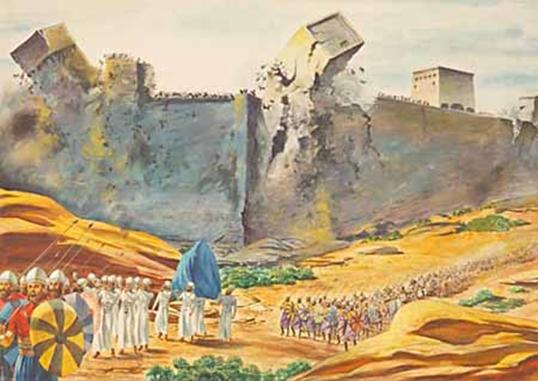
Joshua 8-14: Bad news, Joshua. “Three days after making the treaty, they learned that these people actually lived nearby!” (Joshua 9 in The New Living Translation).

Ezra 4-7: Not only does the enemy waylay us with deception, but he also uses straight-up, in-your-face opposition. In your reading, you’ll see God’s work get sidelined with politics and legal affairs. Sounds like today.

Romans 8-14: “Therefore, brothers and sisters, in view of the mercies of God, I urge you to present your bodies as a living sacrifice, holy and pleasing to God; this is your true worship.Do not be conformed to this age, but be transformed by the renewing of your mind, so that you may discern what is the good, pleasing, and perfect will of God” (Romans 12 in The Christian Standard Bible).

MSG are daily readings linked to The Message Bible on BibleGateway.com.

CSB are daily readings linked to The Christian Standard Bible on BibleGateway.com.

NLT are daily readings linked to The New Living Translation on BibleGateway.com.
Be With Him: April 1-7, 2019 (Mon-Sun): Read through Deuteronomy, Joshua, Ezra, and Romans

All 66 books of the Bible are inspired by God and are profitable for us, but some are more easily understood and more readily digested and loved than other books. Books like Leviticus from last month require some background study to get the most out of them. After all, we don’t live in the Middle East thousands of years ago. I know that we should rely on the Spirit working in us to understand (2 Tim. 2:7; 1 John 2:27), but studying is a biblical concept, too (Ezra 7:10; 2 Tim. 2:15).

Relying on the Spirit is a neglected way of life for many, but so is studying the Bible. We may read the Bible, but that is only the beginning of studying. Studying involves rereading and mulling over Scripture. We need to meditate on and memorize Scripture, and we may read what others have learned and contemplated in their own studies. However, all of this must be coupled with seeking God and being still and waiting on Him to speak through His word. I’ll be the first to tell you that it’s much easier to read the word, ponder it a bit, and move on to something else, not because we don’t like the word or God but because some of us feel that we ought to be doing something. (As if waiting on God is not doing something.) After hearing Jim Cymbala speak at an event, I feel the need as I have so often to be still and wait on God, but it’s not easy for me. One of Cymbala’s points was that Jesus didn’t first call His disciples to preach or drive out demons. He first called them to be with Him. “Jesus went up the mountain and summoned those He wanted, and they came to Him. He appointed twelve, whom He also named apostles, to be with Him, to send them out to preach, and to have authority to drive out demons” (Mark 3 in The Christian Standard Bible). I pray that you’ll be with Him this week, really be with Him.

This week you’ll read…

Deuteronomy 1-7: Deuteronomy is Moses’ reiteration of the Law, or his second-telling of the Law. If you read through Exodus and Leviticus in February and March, you’ll recognize some parts of Deuteronomy but maybe summarized and told differently. Moses now has a new generation who will enter the Promised Land, and the old, faithless generation has died off.

Joshua 1-7: Along with Deuteronomy, you’ll read Joshua and enter the Promised Land and begin the conquest with Joshua, Israel’s next leader.

Ezra 1-3: Alongside these books, you’ll also read Ezra written by the scribe Ezra who writes hundreds of years later after Judah (Israel’s Southern Kingdom) was taken captive and then allowed to return.

Romans 1-7: You’ll also read Romans which is arguably the greatest book of the Bible.

MSG are daily readings linked to The Message Bible on BibleGateway.com.

CSB are daily readings linked to The Christian Standard Bible on BibleGateway.com.

NLT are daily readings linked to The New Living Translation on BibleGateway.com.

Miracles (Days 22-31): Read through Leviticus, Number, and Acts

Some people don’t believe in miracles. Period. They believe in science. They believe in tangible things which can be studied. They commit miracles to the class of fairy tales. Donkeys talking. People walking on water. Raising the dead. Creating worlds with words. Everything must be explained by science, or it didn’t really happen. Of course, many of those people also believe in evolution which is impossibly observable and thus unscientific.

Some people definitely believe in miracles. Nothing is impossible for God. They talk to God about everything, believing that He is who He claims to be and will come through for them and others. Parting seas in the past. No problem. Believing God today for whatever. No problem. Their faith is rooted in the Bible and is active in life today.

Then there are those who believe in miracles at a distance. The Old Testament miracles are easy for them to believe. That was way back then. The New Testament wonders are easy to accept as true. Those are still far in the past. Where they have problems with miracles is in today’s world, but the God of yesterday is the God of today. Now let me give these people some slack. When you look in the Bible, miracles were only common in five periods: (1) Creation, (2) the Exodus, (3) Elijah and Elisha’s ministries, (4) Jesus’ life, and (5) the time of the early church (Book of Acts). Miracles are not commonplace in the rest of the Bible.

Now let me say that the point isn’t really whether to believe in miracles or not, but do we believe in the Lord? If we believe what the Bible declares about God, then we must believe that God is a miracle-worker today whether we see Him do a physical miracle or not. Is your faith small? I must admit that my prayer oftentimes is like the father who asked Jesus to heal his son, confessing, “I do believe, but help me overcome my unbelief!” (Mark 9 in The New Living Translation). I will continue to inform my faith today with the faith and truth of the past. I will firmly plant my feet on the foundation laid by previous God-followers. “Together, we are His house, built on the foundation of the apostles and the prophets. And the cornerstone is Christ Jesus Himself.” (Ephesians 2 in The New Living Translation).

This week you’ll read…

Leviticus 22-27: The Year of Jubilee (Leviticus 25) is a wonderful picture of Christ’s redeeming us from slavery to sin, death, and hell. To read more about this, check out the link below.

Numbers 22-36: This week, you’ll read about one of those miracles—a prophet for hire named Balaam who is miraculously reprimanded by his faithful donkey.

Psalms 40-45: Another great miracle is anyone being saved from sin and sure destruction. David gives us a great picture of rescue in Psalm 40 which has many parallels with salvation. “I waited patiently for the Lord; And He inclined to me, And heard my cry. He also brought me up out of a horrible pit, Out of the miry clay, And set my feet upon a rock, And established my steps. He has put a new song in my mouth—Praise to our God” (Psalm 40 in The New King James Version).

Acts 22-28: Other than Jesus, the Apostle Paul is possibly the most beloved character in the Bible. Under God’s inspiration, he’s given us so much, and over half of the Book of Acts is devoted to Paul’s life and ministry. In your last 11 days of reading in March, you’ll witness Paul go to Jerusalem which begins his slow incarcerated journey to Rome. “That night the Master appeared to Paul: ‘It’s going to be all right. Everything is going to turn out for the best. You’ve been a good witness for me here in Jerusalem. Now you’re going to be my witness in Rome!’” (Acts 23 in The Message Bible).

Many miracles occurred in the Book of Acts, and you’ll read about a couple this week in Acts 28. See the link below to read an article about all of the miracles in Acts.

MSG are daily readings linked to The Message Bible on BibleGateway.com.

CSB are daily readings linked to The Christian Standard Bible on BibleGateway.com.

NLT are daily readings linked to The New Living Translation on BibleGateway.com.

NKJV is a reading linked to The New King James Version on BibleGateway.com.

Life Is a Vapor (Days 15-21): Read through Leviticus, Numbers, and Acts

You are a vapor. A mere shadow. As such, you and I are fading flowers and must be ready to meet the eternal God, the Giver of life and breath and the Judge of the living and the dead. In order to be ready, we must believe the gospel, or good news, of Jesus. By God’s grace and through faith in Him, we’re saved. We’re transferred from death to life, from the domain of darkness into the kingdom of the Son He loves.

As you read Leviticus 16 this week, you’ll read about the Day of Atonement which was the one day of the year in which the high priest could enter the Holy of Holies to meet with God. This day also involved special rituals. The high priest would offer a sacrifice for his sin and his family’s sin. Then he would take two goats. By lot, one would be sacrificed for the sins of the people, and the other would become the scapegoat. The high priest would place his hands on the head of the goat and confess the nation’s sin and rebellion and then send the goat into the wilderness, symbolically removing the sin of the people. All this was a foreshadow of Christ. He was the perfect Great High Priest. He was sacrificed to atone for the sins of the people, and He was the scapegoat on whom was laid the sins of the people. As the scapegoat was sent out into the wilderness, so Jesus was sent outside the city of Jerusalem to the cross.

Christ is our only hope of salvation, and it’s from this position of gracious security that the early disciples such as Paul and Silas and Barnabas and John Mark stepped out of their comfort zones to spend their lives for Christ and His gospel. As you read about their ministry this week, consider stepping out of your comfort zone to spend your life for Christ. Is your life being exhausted for Jesus or exhausted for your own agenda?

This week you’ll read…

Leviticus 15-21: To read more about the Day of Atonement, check out the links below.

Numbers 15-21: One of your chapters this week will focus on some disgruntled Israelites who became dissatisfied with the leadership and began seeing themselves as more important than they were. People were led astray by Korah’s actions, and he literally led a group of followers to an early grave. Are you good at submitting to the godly leaders in your life? Are you willing to follow God’s plan even if it takes you out of the limelight?

Psalms 37-39: “Take delight in the Lord, and He will give you your heart’s desires. Commit your way to the Lord; trust in Him, and He will act, making your righteousness shine like the dawn, your justice like the noonday” (Psalm 37 in The Christian Standard Bible).

“Yes, every human being stands as only a vapor. Yes, a person goes about like a mere shadow. Indeed, they rush around in vain, gathering possessions without knowing who will get them. Now, Lord, what do I wait for? My hope is in you” (Psalm 39 in The Christian Standard Bible).

Acts 15-21: “Around midnight Paul and Silas were praying and singing hymns to God, and the other prisoners were listening” (Acts 16 in The New Living Translation). Are you being persecuted for your walk with Christ? Are you persevering with Jesus even when it gets tough to walk with Him?

MSG are daily readings linked to The Message Bible on BibleGateway.com.

CSB are daily readings linked to The Christian Standard Bible on BibleGateway.com.

NLT are daily readings linked to The New Living Translation on BibleGateway.com.

Unserious Christian? (Days 8-14): Read through Leviticus, Numbers, and Acts

We’re either for God or against Him. We’re either gathering or scattering. We either treat God as the holy God He is or have a flippant attitude toward God and sin. We’re either progressing or regressing in our walk with Christ. We’re deceiving ourselves if we think there’s a middle plateau for the unserious Christian. Did I just use those two words together—unserious and Christian?

In Acts, we’ll see this week that a major persecution of the Church begins after the stoning of Stephen, and the Church scatters from Jerusalem to neighboring areas and beyond to escape the onslaught. One of those places was Antioch (in modern-day Turkey), and it was in Antioch where the believers were first derisively called Christians. Obviously, these believers were anything but unserious back in that day of persecution, yet in our modern context, Christianity is coupled with so much lack of sobriety that the early church possibly wouldn’t recognize many claimants to be their brothers or sisters in Christ.

As you read this week about Nadab and Abihu (Leviticus 10) and complainers and faith-slackers (Numbers 11-14) and then read about serious believers (Acts 8-14), examine your life. Is your Christianity marked by grace and holiness? Is your faith alive and working? Maybe you’ve become distracted by the cares of or your love for the world. Consider getting serious and doing an about-face if that’s the case.

This week you’ll read…

Leviticus 8-14: Nadab and Abihu were the elder sons of Aaron, the high priest. As such, they were priests as well, but had more limited roles than Aaron. God killed them with fire after they offered strange fire to Him. If you want to read more about the “strange fire” incident, click the link below.

What is the meaning of the strange fire in Leviticus 10:1?

Numbers 8-14: Moses deals with complainers and unbelief as they near the Promised Land. Keep this verse in mind for this passage. “Now without faith it is impossible to please God” (Hebrews 11 in The Christian Standard Bible).

Psalms 34-36: “Taste and see that the Lord is good. How happy is the person who takes refuge in Him!” (Psalm 34 in The Christian Standard Bible).

“Lord, Your faithful love reaches to heaven, Your faithfulness to the clouds. Your righteousness is like the highest mountains, Your judgments like the deepest sea” (Psalm 36 in The Christian Standard Bible).

Acts 8-14: Acts is such an exciting book of the Bible. It’s easy to see why so many people count it a favorite. Events this week include these. Saul persecutes the Church, and it scatters. Philip goes to Samaria to evangelize and later has an encounter with an Ethiopian. Saul has his Damascus Road experience. Peter ministers and brings the gospel to the Gentiles. James, one of the Twelve, is martyred. Peter is imprisoned for preaching Christ and is released by an angel. Paul and Barnabas take their first missionary journey.

MSG are daily readings linked to The Message Bible on BibleGateway.com.

CSB are daily readings linked to The Christian Standard Bible on BibleGateway.com.

NLT are daily readings linked to The New Living Translation on BibleGateway.com.