God’s Water Cycle: May 1-7, 2019 (Wed-Tues): Read through Judges, 1 Samuel, and 1 Corinthians

Ever gotten stuck in a cycle? When my wife and I were newly married, she worked at a battered women’s shelter for a couple years. One of the things that she learned was that women can get into a cycle of abuse. The abusing husband or boyfriend charms the lady. Tension eventually builds. Then there is an episode of abuse against the woman. The man woos her back in a honeymoon phase of apologies and promises and displays of “love.” Eventually, tension builds again, and there is another act of violence against the woman. Then the abuser draws the woman back again through a honeymoon phase. The woman loves the man and keeps thinking that this time it will be different that he’s changed, and she’s trapped in this cycle of abuse.

Water goes through a cycle on the earth as well. Humor me for a minute as I present a simplistic view of the earthly water cycle. Water falls on the earth as rain. The rain creates run-off as gravity leads water to the lowest point available. The sun heats up the water, causing evaporation. As the water vapor rises in the atmosphere, it cools and attaches to particles in the sky and condenses to form clouds. As the clouds build, they eventually drop their water and rain upon the earth.

In the book of Judges, the Israelites were in a cycle as well, God’s Water Cycle. God would rain down His blessings upon His people. Eventually, they would get their eyes off the Blesser and onto the blessings. They would run off into sin and pursue other gods. God would heat things up for the Israelites by allowing them to become ensnared and enslaved. This would cause them to lift up prayers to heaven in repentance for deliverance. After letting them suffer for a good while, God would come to their rescue, deliver them, and rain His blessings upon them. After which, they would in time run off to pursue other things and gods.

You are on this cycle. Sometimes it’s a simple devotion such as this one which prompts your repentance from a detour. At other times, God may have to use a stronger wake-up call to bring repentance in our lives. I’ve experienced both. Save yourself time and heartache. Listen to the sermon. Heed the soft correction. Listen to that still, small Voice.

So where are you on this cycle?

  • Are you in the middle of a shower of blessings? Keep your eyes on the Blesser.
  • Are you running off? Turn back to the Lord.
  • Are you in the heat of God’s correction or training? Are you in the middle of some catastrophe and discipline of God? Stop resisting God and turn back to Him.
  • Are your prayers rising up to God with a heart of repentance and love?

This week you’ll read…

Judges 1-7: “God’s angel went up from Gilgal to Bokim and said, ‘I brought you out of Egypt; I led you to the land that I promised to your fathers; and I said, I’ll never break my covenant with you—never! And you’re never to make a covenant with the people who live in this land. Tear down their altars! But you haven’t obeyed Me! What’s this that you’re doing? So now I’m telling you that I won’t drive them out before you. They’ll trip you up and their gods will become a trap.” When God’s angel had spoken these words to all the People of Israel, they cried out—oh! how they wept! They named the place Bokim (Weepers). And there they sacrificed to God” (Judges 2 in The Message Bible).

1 Samuel 1-7: Hannah was despondent. She was barren and her husband’s other wife ridiculed her because Hannah had no children, so she went to the tabernacle. “Deeply hurt, Hannah prayed to the Lord and wept with many tears. Making a vow, she pleaded, ‘Lord of Armies, if you will take notice of your servant’s affliction, remember and not forget me, and give your servant a son, I will give him to the Lord all the days of his life, and his hair will never be cut’” (1 Samuel 1 in The Christian Standard Bible).

1 Corinthians 1-7: “Dear brothers and sisters, when I was with you I couldn’t talk to you as I would to spiritual people. I had to talk as though you belonged to this world or as though you were infants in the Christian life. I had to feed you with milk, not with solid food, because you weren’t ready for anything stronger. And you still aren’t ready, for you are still controlled by your sinful nature. You are jealous of one another and quarrel with each other. Doesn’t that prove you are controlled by your sinful nature? Aren’t you living like people of the world?” (1 Corinthians 3 in The New Living Translation)

MSG are daily readings linked to The Message Bible on BibleGateway.com.

CSB are daily readings linked to The Christian Standard Bible on BibleGateway.com.

NLT are daily readings linked to The New Living Translation on BibleGateway.com.

ID: Your Identity in Christ: April 22-30, 2019 (Mon-Tues): Read through Deuteronomy, Joshua, and Ephesians

Everyone has an identity, but how would you identify yourself? Many people identify themselves by what they do. You may be a carpenter, an accountant, a teacher, a preacher, a clerk, or a salesman. I’m not asking what you do. You can change what you do, but you can’t change your identity. I used to be a public school teacher. Now I’m a minister. My mom used to be a beautician and then a school bus driver, but she’s been a nurse for many years now. You can change what you do, but you cannot change your identity. Now don’t start rattling off your social security number. We don’t want any identity theft going on.

Your identity is who you are. So who are you? The two main identity groups in the world are children of the devil and children of God. If you’re a child of God, then you have an awesome identity. Now get a hold of yourself. You can’t take credit for it. God did it. He gave each believer a jaw-dropping identity, and you’ll read about it in this last reading in April.

Ephesians is one of the greatest books of the Bible (in my opinion), and each of its six chapters is power-packed with pieces of your identity in Christ. You want to know who you are? Look below. I’ve personalized these truths from Ephesians. If you’re a believer in Christ, say each one of these with confidence and conviction. Don’t just take my word for it. Read God’s word.

ID: Your Identity in Christ:

If you’re a true believer in Christ, I pray that you will truly grasp your identity in Christ, who you really are, and live in confidence that God has made you this. You’re not hoping to attain this. He has already given you this identity.

This week you’ll read…

Deuteronomy 22-34: “This command that I give you today is certainly not too difficult or beyond your reach. It is not in heaven so that you have to ask, ‘Who will go up to heaven, get it for us, and proclaim it to us so that we may follow it?’ And it is not across the sea so that you have to ask, ‘Who will cross the sea, get it for us, and proclaim it to us so that we may follow it?’ But the message is very near you, in your mouth and in your heart, so that you may follow it. …I call heaven and earth as witnesses against you today that I have set before you life and death, blessing and curse. Choose life so that you and your descendants may live” (Deuteronomy 30 in The Christian Standard Bible).

Joshua 22-24: “Therefore, fear the Lord and worship Him in sincerity and truth. Get rid of the gods your fathers worshiped beyond the Euphrates River and in Egypt, and worship the Lord. But if it doesn’t please you to worship the Lord, choose for yourselves today: Which will you worship—the gods your fathers worshiped beyond the Euphrates River or the gods of the Amorites in whose land you are living? As for me and my family, we will worship the Lord.” (Joshua 24 in The Christian Standard Bible).

Psalms 52-60: “ When I am afraid, I will trust in You. In God, whose word I praise, in God I trust; I will not be afraid. What can mere mortals do to me?” (Psalm 56 in The Christian Standard Bible).

Ephesians 1-6: “Finally, be strengthened by the Lord and by His vast strength. Put on the full armor of God so that you can stand against the schemes of the devil. For our struggle is not against flesh and blood, but against the rulers, against the authorities, against the cosmic powers of this darkness, against evil, spiritual forces in the heavens. For this reason take up the full armor of God, so that you may be able to resist in the evil day, and having prepared everything, to take your stand” (Ephesians 6 in The Christian Standard Bible).

MSG are daily readings linked to The Message Bible on BibleGateway.com.

CSB are daily readings linked to The Christian Standard Bible on BibleGateway.com.

NLT are daily readings linked to The New Living Translation on BibleGateway.com.

A Lover and a Serial Killer: April 15-21, 2019 (Mon-Sun): Read through Deuteronomy, Joshua, Ezra, and Romans

Sin is drop-dead gorgeous, a lover and a serial killer, giving pleasure and then poisoning.

Sin is a mentor and a predator, growing its prey and then pouncing to kill.

Sin is a comforter and a peace-robber, helping mask the pain yet increasing the anxiety.

Sin is an emancipator and an enslaver, throwing off all restraint and then chaining in a prison of bondage and regret.

Sin exudes happiness and kills joy, calling for the pursuit of happiness while strangling inner joy.

Sin is a truth-teller and a liar, using truth when it forwards its agenda and using lies for the same.

Sin is a comrade and an enemy, an old friend with whom we’re comfortable and a foreign spy betraying our best interests.

I’ve been sin’s buddy and victim. You have, too. We’ve been duped by the promises and trapped by the emptiness. We’ve been enticed by the glow and burned by the fire. We’ve let sin reign in our mortal bodies in various ways because we’ve swallowed the lie and set God’s ways aside. We’ve failed in our thoughts, actions, and omissions. Lest you forget, sin isn’t just for the addicts of alcohol, drugs, and sex. Sin doesn’t discriminate on the basis of race, religion, and gender. Sin can be right in the middle of our occupations and preoccupations. Sin is found in the most conservative churches and in the most faithful of families. In less than ten honest seconds, you could name a sin which trips you up, and in ten minutes, you could make a list which would start discouraging your soul. When it comes to sin, we can be smart and then so stupid. Every person has proven to himself and God why humanity is in need of a Savior. I’m so glad the Father sent the Son to redeem mankind so that by the Spirit we can be unshackled from sin and rescued from the mouth of hell.

Regarding this week’s reading, you’ll see Ezra being struck by the sin in and around him. “O my God, I am utterly ashamed; I blush to lift up my face to You. For our sins are piled higher than our heads, and our guilt has reached to the heavens. From the days of our ancestors until now, we have been steeped in sin” (Ezra 9 in The New Living Translation). Earlier during the reign of King David, a man after God’s own heart, we hear the broken cry from David after he was confronted with the sin in his life after he’d stolen Bathsheba through adultery and murder. “Create in me a clean heart, O God, and renew a right spirit within me. Cast me not away from Your presence, and take not Your Holy Spirit from me. Restore to me the joy of Your salvation, and uphold me with a willing spirit” (Psalm 51 in The English Standard Version). May we find contrite hearts after seeing the sin in our hearts and experience the incomparable mercy, grace, and forgiveness of God.

This week you’ll read…

Deuteronomy 15-21: Moses gives a little prophecy which comes about in the days of Samuel the judge. “When you enter the land that God, your God, is giving you and take it over and settle down, and then say, “I’m going to get me a king, a king like all the nations around me,” make sure you get yourself a king whom God, your God, chooses.” (Deuteronomy 17 in The Message Bible). When the people refused God as king in Samuel’s day, God was not surprised. He gave them their heart’s desire—Saul, a good-looking man but not kingly material. David, a man after God’s heart, would follow.

Joshua 15-21: After much conquering, the Israelites settle in the Promised Land, and each tribe receives its inheritance, or allotment of land.

Ezra 8-10: “My dear God, I’m so totally ashamed, I can’t bear to face You. O my God—our iniquities are piled up so high that we can’t see out; our guilt touches the skies. We’ve been stuck in a muck of guilt since the time of our ancestors until right now” (Ezra 9 in The Message Bible).

Psalms 46-51: “Be still, and know that I am God!” (Psalm 46 in The New Living Translation).

Romans 15-16: “May the God of hope fill you with all joy and peace as you trust in Him, so that you may overflow with hope by the power of the Holy Spirit” (Romans 15 in The New International Version).

MSG are daily readings linked to The Message Bible on BibleGateway.com.

CSB are daily readings linked to The Christian Standard Bible on BibleGateway.com.

NLT are daily readings linked to The New Living Translation on BibleGateway.com.

NIV are daily readings linked to The New International Version on BibleGateway.com.

ESV are daily readings linked to The English Standard Version on BibleGateway.com.

Decepticons: April 8-14, 2019 (Mon-Sun): Read through Deuteronomy, Joshua, Ezra, and Romans

(Bumblebee movie spoiler alert): In the late 1980s in the sci-fi world of the Transformers, the Decepticons are taking over Cybertron, but the Autobots are a resistance group trying to preserve a decent society. An Autobot named B-127 (Bumblebee) is sent to scout out Earth to hopefully establish a haven for the Autobots in an attempt to regroup and eventually save Cybertron. A couple Decepticons find out that Bumblebee is on Earth and go there to root him out in hopes of finding the other Autobots and ridding the universe of them. Through deception, the Decepticons gain access to the USA’s communications system and transform it to create the inception of the internet as they search for Bumblebee. During their deception, U.S. Agent Burns questions the general in charge of the communications system saying, “They literally call themselves Decepticons. That doesn’t set off any red flags?”

People deceive for various reasons: to advance in position, power, or possessions; to protect themselves; and to destroy opposition. Of course, there may be other reasons, but these will do for now. I realize that deception has been used against evil men such as Corrie ten Boom and her family deceiving Nazi soldiers and sympathizers as the ten Boom family hid Jews in their home during WWII. They felt it better to preserve lives than to be honest and forthcoming in their situation. That’s a blog for another day.

As you read Joshua this week, you’ll encounter a shrewd band of travelers who deceived Joshua and the leaders of Israel. The Gibeonites posed as faraway voyagers who were in awe of the Israelites’ God and wanted to make a treaty with Israel after hearing of the military victories which their God had won for them. However, these people lived right down the road. They were neighbors, and they feared that Israel would decimate them as they did the armies in the wilderness and Jericho and Ai. Through deception, they brokered a treaty with Israel.

Do you know why Israel fell for this deception? They depended on their own reasoning and didn’t seek the Lord. “The men of Israel looked them over and accepted the evidence. But they didn’t ask God about it” (Joshua 9 in The Message Bible). What about you? Have you ever been snookered by some slick words because you didn’t seek God and godly counsel? As you read the account in Joshua, you may think, “Joshua, dude, look at all these red flags. They literally call themselves Decepticons. Don’t do it!” But he already did it, and we fall prey as well when our own ingenuity and reasoning, when our business sense and worldly-mindedness rule our minds and not the word of God and the Spirit, when we don’t seek Him in all things. Follow the proverb that says: “Trust God from the bottom of your heart; don’t try to figure out everything on your own. Listen for God’s voice in everything you do, everywhere you go; He’s the one who will keep you on track” (Proverbs 3 in The Message Bible).

This week you’ll read…

Deuteronomy 8-14: “And now, Israel, what does the Lord your God require of you? He requires only that you fear the Lord your God, and live in a way that pleases Him, and love Him and serve Him with all your heart and soul. And you must always obey the Lord’s commands and decrees that I am giving you today for your own good” (Deuteronomy 10 in The New Living Translation).

Joshua 8-14: Bad news, Joshua. “Three days after making the treaty, they learned that these people actually lived nearby!” (Joshua 9 in The New Living Translation).

Ezra 4-7: Not only does the enemy waylay us with deception, but he also uses straight-up, in-your-face opposition. In your reading, you’ll see God’s work get sidelined with politics and legal affairs. Sounds like today.

Romans 8-14: “Therefore, brothers and sisters, in view of the mercies of God, I urge you to present your bodies as a living sacrifice, holy and pleasing to God; this is your true worship.Do not be conformed to this age, but be transformed by the renewing of your mind, so that you may discern what is the good, pleasing, and perfect will of God” (Romans 12 in The Christian Standard Bible).

MSG are daily readings linked to The Message Bible on BibleGateway.com.

CSB are daily readings linked to The Christian Standard Bible on BibleGateway.com.

NLT are daily readings linked to The New Living Translation on BibleGateway.com.
Be With Him: April 1-7, 2019 (Mon-Sun): Read through Deuteronomy, Joshua, Ezra, and Romans

All 66 books of the Bible are inspired by God and are profitable for us, but some are more easily understood and more readily digested and loved than other books. Books like Leviticus from last month require some background study to get the most out of them. After all, we don’t live in the Middle East thousands of years ago. I know that we should rely on the Spirit working in us to understand (2 Tim. 2:7; 1 John 2:27), but studying is a biblical concept, too (Ezra 7:10; 2 Tim. 2:15).

Relying on the Spirit is a neglected way of life for many, but so is studying the Bible. We may read the Bible, but that is only the beginning of studying. Studying involves rereading and mulling over Scripture. We need to meditate on and memorize Scripture, and we may read what others have learned and contemplated in their own studies. However, all of this must be coupled with seeking God and being still and waiting on Him to speak through His word. I’ll be the first to tell you that it’s much easier to read the word, ponder it a bit, and move on to something else, not because we don’t like the word or God but because some of us feel that we ought to be doing something. (As if waiting on God is not doing something.) After hearing Jim Cymbala speak at an event, I feel the need as I have so often to be still and wait on God, but it’s not easy for me. One of Cymbala’s points was that Jesus didn’t first call His disciples to preach or drive out demons. He first called them to be with Him. “Jesus went up the mountain and summoned those He wanted, and they came to Him. He appointed twelve, whom He also named apostles, to be with Him, to send them out to preach, and to have authority to drive out demons” (Mark 3 in The Christian Standard Bible). I pray that you’ll be with Him this week, really be with Him.

This week you’ll read…

Deuteronomy 1-7: Deuteronomy is Moses’ reiteration of the Law, or his second-telling of the Law. If you read through Exodus and Leviticus in February and March, you’ll recognize some parts of Deuteronomy but maybe summarized and told differently. Moses now has a new generation who will enter the Promised Land, and the old, faithless generation has died off.

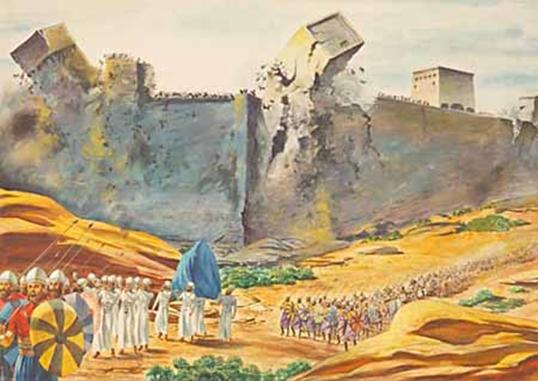
Joshua 1-7: Along with Deuteronomy, you’ll read Joshua and enter the Promised Land and begin the conquest with Joshua, Israel’s next leader.

Ezra 1-3: Alongside these books, you’ll also read Ezra written by the scribe Ezra who writes hundreds of years later after Judah (Israel’s Southern Kingdom) was taken captive and then allowed to return.

Romans 1-7: You’ll also read Romans which is arguably the greatest book of the Bible.

MSG are daily readings linked to The Message Bible on BibleGateway.com.

CSB are daily readings linked to The Christian Standard Bible on BibleGateway.com.

NLT are daily readings linked to The New Living Translation on BibleGateway.com.

Life Is a Vapor (Days 15-21): Read through Leviticus, Numbers, and Acts

You are a vapor. A mere shadow. As such, you and I are fading flowers and must be ready to meet the eternal God, the Giver of life and breath and the Judge of the living and the dead. In order to be ready, we must believe the gospel, or good news, of Jesus. By God’s grace and through faith in Him, we’re saved. We’re transferred from death to life, from the domain of darkness into the kingdom of the Son He loves.

As you read Leviticus 16 this week, you’ll read about the Day of Atonement which was the one day of the year in which the high priest could enter the Holy of Holies to meet with God. This day also involved special rituals. The high priest would offer a sacrifice for his sin and his family’s sin. Then he would take two goats. By lot, one would be sacrificed for the sins of the people, and the other would become the scapegoat. The high priest would place his hands on the head of the goat and confess the nation’s sin and rebellion and then send the goat into the wilderness, symbolically removing the sin of the people. All this was a foreshadow of Christ. He was the perfect Great High Priest. He was sacrificed to atone for the sins of the people, and He was the scapegoat on whom was laid the sins of the people. As the scapegoat was sent out into the wilderness, so Jesus was sent outside the city of Jerusalem to the cross.

Christ is our only hope of salvation, and it’s from this position of gracious security that the early disciples such as Paul and Silas and Barnabas and John Mark stepped out of their comfort zones to spend their lives for Christ and His gospel. As you read about their ministry this week, consider stepping out of your comfort zone to spend your life for Christ. Is your life being exhausted for Jesus or exhausted for your own agenda?

This week you’ll read…

Leviticus 15-21: To read more about the Day of Atonement, check out the links below.

Numbers 15-21: One of your chapters this week will focus on some disgruntled Israelites who became dissatisfied with the leadership and began seeing themselves as more important than they were. People were led astray by Korah’s actions, and he literally led a group of followers to an early grave. Are you good at submitting to the godly leaders in your life? Are you willing to follow God’s plan even if it takes you out of the limelight?

Psalms 37-39: “Take delight in the Lord, and He will give you your heart’s desires. Commit your way to the Lord; trust in Him, and He will act, making your righteousness shine like the dawn, your justice like the noonday” (Psalm 37 in The Christian Standard Bible).

“Yes, every human being stands as only a vapor. Yes, a person goes about like a mere shadow. Indeed, they rush around in vain, gathering possessions without knowing who will get them. Now, Lord, what do I wait for? My hope is in you” (Psalm 39 in The Christian Standard Bible).

Acts 15-21: “Around midnight Paul and Silas were praying and singing hymns to God, and the other prisoners were listening” (Acts 16 in The New Living Translation). Are you being persecuted for your walk with Christ? Are you persevering with Jesus even when it gets tough to walk with Him?

MSG are daily readings linked to The Message Bible on BibleGateway.com.

CSB are daily readings linked to The Christian Standard Bible on BibleGateway.com.

NLT are daily readings linked to The New Living Translation on BibleGateway.com.

Unserious Christian? (Days 8-14): Read through Leviticus, Numbers, and Acts

We’re either for God or against Him. We’re either gathering or scattering. We either treat God as the holy God He is or have a flippant attitude toward God and sin. We’re either progressing or regressing in our walk with Christ. We’re deceiving ourselves if we think there’s a middle plateau for the unserious Christian. Did I just use those two words together—unserious and Christian?

In Acts, we’ll see this week that a major persecution of the Church begins after the stoning of Stephen, and the Church scatters from Jerusalem to neighboring areas and beyond to escape the onslaught. One of those places was Antioch (in modern-day Turkey), and it was in Antioch where the believers were first derisively called Christians. Obviously, these believers were anything but unserious back in that day of persecution, yet in our modern context, Christianity is coupled with so much lack of sobriety that the early church possibly wouldn’t recognize many claimants to be their brothers or sisters in Christ.

As you read this week about Nadab and Abihu (Leviticus 10) and complainers and faith-slackers (Numbers 11-14) and then read about serious believers (Acts 8-14), examine your life. Is your Christianity marked by grace and holiness? Is your faith alive and working? Maybe you’ve become distracted by the cares of or your love for the world. Consider getting serious and doing an about-face if that’s the case.

This week you’ll read…

Leviticus 8-14: Nadab and Abihu were the elder sons of Aaron, the high priest. As such, they were priests as well, but had more limited roles than Aaron. God killed them with fire after they offered strange fire to Him. If you want to read more about the “strange fire” incident, click the link below.

What is the meaning of the strange fire in Leviticus 10:1?

Numbers 8-14: Moses deals with complainers and unbelief as they near the Promised Land. Keep this verse in mind for this passage. “Now without faith it is impossible to please God” (Hebrews 11 in The Christian Standard Bible).

Psalms 34-36: “Taste and see that the Lord is good. How happy is the person who takes refuge in Him!” (Psalm 34 in The Christian Standard Bible).

“Lord, Your faithful love reaches to heaven, Your faithfulness to the clouds. Your righteousness is like the highest mountains, Your judgments like the deepest sea” (Psalm 36 in The Christian Standard Bible).

Acts 8-14: Acts is such an exciting book of the Bible. It’s easy to see why so many people count it a favorite. Events this week include these. Saul persecutes the Church, and it scatters. Philip goes to Samaria to evangelize and later has an encounter with an Ethiopian. Saul has his Damascus Road experience. Peter ministers and brings the gospel to the Gentiles. James, one of the Twelve, is martyred. Peter is imprisoned for preaching Christ and is released by an angel. Paul and Barnabas take their first missionary journey.

MSG are daily readings linked to The Message Bible on BibleGateway.com.

CSB are daily readings linked to The Christian Standard Bible on BibleGateway.com.

NLT are daily readings linked to The New Living Translation on BibleGateway.com.

What Are You Offering to God? (Days 1-7): Read Leviticus, Numbers, and Acts

Have you given an offering to the Lord? Maybe it was money, time, or worship. In Leviticus and Numbers, you’ll read about various offerings which were God-prescribed ways to offer something to Him for various reasons: showing devotion to God, acknowledging sin and repentance and desiring forgiveness, and showing thanks to God for His provision and for fellowship, or peace.

The awesome thing about these Old Testament offerings is that when Jesus came, He fulfilled the Old Testament ceremonial law, so there’s no more need for shedding blood to cover our sin since the perfect sacrificial Lamb died once for the sin of the whole world. The Old Testament priests and sacrifices foreshadowed the ultimate Sacrifice who was simultaneously our Great High Priest. Therefore, as you read Leviticus, remember that it’s not outdated laws from another time but a picture of your redemption realized in Christ. This is what Peter understood after the resurrection, and then he proclaimed boldly this gospel to the crowds on the day of Pentecost which you’ll read about in Acts along with so many other historical accounts of disciples telling the gospel story.

This week you’ll read…

Leviticus 1-7: The following links will explain the various offerings.

Numbers 1-7: “May the Lord bless you and protect you; may the Lord make His face shine on you and be gracious to you; may the Lord look with favor on you and give you peace” (Numbers 6 in The Christian Standard Bible).

Psalms 31-33: Sometimes we get the mistaken notion that God was not merciful or gracious in the Old Testament. The truth is that He is the same yesterday, today, and forever (Heb. 13:8). Read about God’s grace in Psalm 32 this week as King David recalls his sin. “How joyful is the one whose transgression is forgiven, whose sin is covered! How joyful is a person whom the Lord does not charge with iniquity and in whose spirit is no deceit!” (The Christian Standard Bible)

Acts 1-7: You’ll experience the exciting birth of the church as the Holy Spirit falls upon the believers and empowers them to share the gospel even in the face of persecution.

MSG are daily readings linked to The Message Bible on BibleGateway.com.

CSB are daily readings linked to The Christian Standard Bible on BibleGateway.com.

NLT are daily readings linked to The New Living Translation on BibleGateway.com.

Glory (Days 22-28): Reading through Exodus, Psalms, Micah, Zechariah, and Luke

Glory! Preachers sometimes use this term in exclamation regarding a great biblical thought. Glory is used of valorous soldiers in war. No guts, no glory. Of course, God is the most glorious and the One who deserves every bit of glory from us. When we try to take credit for our noble feats, we get into trouble as we steal the show from the Lord. He gave you the strength, breath, and mental ability to get the job done, so we should give the credit to the One it’s due.

God’s glory can be displayed visibly to humans, and light is a common manifestation of God’s glory. You’ll read about Moses’ radiant face after he’d spent time with God on the mountain and at the tabernacle. Jesus revealed His glory to Peter, James, and John on a mountain. In our Luke reading this week, we’ll hear of Jesus’ resurrection which surely displayed some of the Lord’s glory. In your Zechariah reading, the prophet prophesies of the end times when God observably wields His glorious power as King over all the earth. In Revelation, that glory is displayed in the eternal city as light in the absence of the sun and moon.

Let us not neglect to deflect back to the Lord any glory given to us. He’s our Creator and Sustainer and deserves all the glory. After all, pride is not appropriate attire for a Christian.

This week you’ll read…

Exodus 34-40: In a passionate display of anger, Moses threw down and broke the first stone tablets containing the Ten Commandments, so Moses meets with God again and new ones are made. Following God’s instructions, the tabernacle gets built and God’s glory fills it up.

Psalms 26-30: “The Lord is my light and salvation—whom should I fear?” (Psalm 27 in The Christian Standard Bible)

Zechariah 8-14: As you’re reading in Luke of Jesus’ arrest, torture, and crucifixion, you’ll also read Zechariah prophesy hundreds of years in advance of Jesus’ coming to earth as a baby, “Strike the shepherd, and the sheep will be scattered” (Zechariah 13 in The Christian Standard Bible). That is exactly what happened and what Jesus prophesied as well as He quoted Zechariah’s words, “I will strike the shepherd, and the sheep of the flock will be scattered” (Matthew 26 in The Christian Standard Bible).

Luke 19-24: In addition to the events surrounding the end of Jesus’ life, we see Jesus encounter and save Zacchaeus the tax collector. We also see the marvelous encounter of the resurrected Christ with the men on the way to Emmaus.

MSG are daily readings linked to The Message Bible on BibleGateway.com.

CSB are daily readings linked to The Christian Standard Bible on BibleGateway.com.

NLT are daily readings linked to The New Living Translation on BibleGateway.com.

Hard-Headed (Days 15-21): Reading through Exodus, Psalms, Micah, Zechariah, and Luke

When I was younger, my dad made this ridiculous claim that I was hard-headed. I didn’t think so, but now I have some of my own kids. Maybe it wasn’t so ridiculous after all. Humanity has a sin problem and coming with that is a varying degree of hard-headedness. You’ll read about some of this this week with the Israelites in the wilderness after the Red Sea deliverance, admonishments given by Zechariah, and reprimands from Jesus to the Pharisees. Are you ever hard-headed with God? Do you need to turn from your hard-headedness right now?

This week you’ll read…

Exodus 27-33: God continues to give Moses many instructions on top of Mount Sinai for 40 days and nights, but the Israelites break their word in impatience and unbelief. “God said to Moses, ‘Tell the Israelites, “You’re one hard-headed people”’” (Exodus 33 in The Message Bible).

Psalms 21-25: Psalm 23 is a favorite psalm for many and is used at many funerals. “God, my shepherd! I don’t need a thing. You have…” (Psalm 23 in The Message Bible). God has done so much for us. He’s our shepherd. He leads us, protects us, provides for us, corrects us, teaches us, and more. When we’re in Him and looking to Him, we realize that we’re in need of nothing else.

Zechariah 1-7: Zechariah, son of Berechiah, was a prophet around 500 years before Jesus was born on the earth. Zechariah was murdered by his countrymen, maybe the last prophet martyred in the Old Testament. Jesus referenced Zechariah to the religious leaders, “Snakes! Reptilian sneaks! Do you think you can worm your way out of this? Never have to pay the piper? It’s on account of people like you that I send prophets and wise guides and scholars generation after generation—and generation after generation you treat them like dirt, greeting them with lynch mobs, hounding them with abuse. You can’t squirm out of this: Every drop of righteous blood ever spilled on this earth, beginning with the blood of that good man Abel right down to the blood of Zechariah, Barachiah’s son, whom you murdered at his prayers, is on your head. All this, I’m telling you, is coming down on you, on your generation” (Matthew 23 in The Message Bible). In Zechariah this week, you’ll read eight visions which he received from the Lord.

Luke 13-18: Jesus teaches many parables in this week’s reading, and He hangs out the Pharisees’ dirty laundry for all to see. After all, they like to be seen by people. He chides them in His parable of the Pharisee and the tax collector. He rebukes them concerning their love of money, too, and He heals people on the Sabbath which caused quite a ruckus with those rule-keepers. Again, in Matthew 23, Jesus harshly chastises these men about things such as these in Luke, “You’re hopeless, you religion scholars and Pharisees! Frauds! You keep meticulous account books, tithing on every nickel and dime you get, but on the meat of God’s Law, things like fairness and compassion and commitment—the absolute basics!—you carelessly take it or leave it. Careful bookkeeping is commendable, but the basics are required. Do you have any idea how silly you look, writing a life story that’s wrong from start to finish, nitpicking over commas and semicolons?” (The Message Bible)

MSG are daily readings linked to The Message Bible on BibleGateway.com.

CSB are daily readings linked to The Christian Standard Bible on BibleGateway.com.

NLT are daily readings linked to The New Living Translation on BibleGateway.com.