Be With Him: April 1-7, 2019 (Mon-Sun): Read through Deuteronomy, Joshua, Ezra, and Romans

All 66 books of the Bible are inspired by God and are profitable for us, but some are more easily understood and more readily digested and loved than other books. Books like Leviticus from last month require some background study to get the most out of them. After all, we don’t live in the Middle East thousands of years ago. I know that we should rely on the Spirit working in us to understand (2 Tim. 2:7; 1 John 2:27), but studying is a biblical concept, too (Ezra 7:10; 2 Tim. 2:15).

Relying on the Spirit is a neglected way of life for many, but so is studying the Bible. We may read the Bible, but that is only the beginning of studying. Studying involves rereading and mulling over Scripture. We need to meditate on and memorize Scripture, and we may read what others have learned and contemplated in their own studies. However, all of this must be coupled with seeking God and being still and waiting on Him to speak through His word. I’ll be the first to tell you that it’s much easier to read the word, ponder it a bit, and move on to something else, not because we don’t like the word or God but because some of us feel that we ought to be doing something. (As if waiting on God is not doing something.) After hearing Jim Cymbala speak at an event, I feel the need as I have so often to be still and wait on God, but it’s not easy for me. One of Cymbala’s points was that Jesus didn’t first call His disciples to preach or drive out demons. He first called them to be with Him. “Jesus went up the mountain and summoned those He wanted, and they came to Him. He appointed twelve, whom He also named apostles, to be with Him, to send them out to preach, and to have authority to drive out demons” (Mark 3 in The Christian Standard Bible). I pray that you’ll be with Him this week, really be with Him.

This week you’ll read…

Deuteronomy 1-7: Deuteronomy is Moses’ reiteration of the Law, or his second-telling of the Law. If you read through Exodus and Leviticus in February and March, you’ll recognize some parts of Deuteronomy but maybe summarized and told differently. Moses now has a new generation who will enter the Promised Land, and the old, faithless generation has died off.

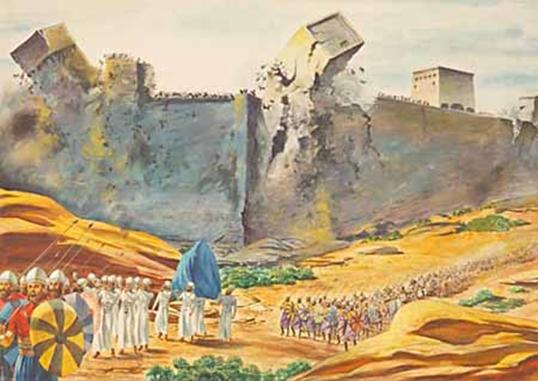
Joshua 1-7: Along with Deuteronomy, you’ll read Joshua and enter the Promised Land and begin the conquest with Joshua, Israel’s next leader.

Ezra 1-3: Alongside these books, you’ll also read Ezra written by the scribe Ezra who writes hundreds of years later after Judah (Israel’s Southern Kingdom) was taken captive and then allowed to return.

Romans 1-7: You’ll also read Romans which is arguably the greatest book of the Bible.

MSG are daily readings linked to The Message Bible on BibleGateway.com.

CSB are daily readings linked to The Christian Standard Bible on BibleGateway.com.

NLT are daily readings linked to The New Living Translation on BibleGateway.com.

Miracles (Days 22-31): Read through Leviticus, Number, and Acts

Some people don’t believe in miracles. Period. They believe in science. They believe in tangible things which can be studied. They commit miracles to the class of fairy tales. Donkeys talking. People walking on water. Raising the dead. Creating worlds with words. Everything must be explained by science, or it didn’t really happen. Of course, many of those people also believe in evolution which is impossibly observable and thus unscientific.

Some people definitely believe in miracles. Nothing is impossible for God. They talk to God about everything, believing that He is who He claims to be and will come through for them and others. Parting seas in the past. No problem. Believing God today for whatever. No problem. Their faith is rooted in the Bible and is active in life today.

Then there are those who believe in miracles at a distance. The Old Testament miracles are easy for them to believe. That was way back then. The New Testament wonders are easy to accept as true. Those are still far in the past. Where they have problems with miracles is in today’s world, but the God of yesterday is the God of today. Now let me give these people some slack. When you look in the Bible, miracles were only common in five periods: (1) Creation, (2) the Exodus, (3) Elijah and Elisha’s ministries, (4) Jesus’ life, and (5) the time of the early church (Book of Acts). Miracles are not commonplace in the rest of the Bible.

Now let me say that the point isn’t really whether to believe in miracles or not, but do we believe in the Lord? If we believe what the Bible declares about God, then we must believe that God is a miracle-worker today whether we see Him do a physical miracle or not. Is your faith small? I must admit that my prayer oftentimes is like the father who asked Jesus to heal his son, confessing, “I do believe, but help me overcome my unbelief!” (Mark 9 in The New Living Translation). I will continue to inform my faith today with the faith and truth of the past. I will firmly plant my feet on the foundation laid by previous God-followers. “Together, we are His house, built on the foundation of the apostles and the prophets. And the cornerstone is Christ Jesus Himself.” (Ephesians 2 in The New Living Translation).

This week you’ll read…

Leviticus 22-27: The Year of Jubilee (Leviticus 25) is a wonderful picture of Christ’s redeeming us from slavery to sin, death, and hell. To read more about this, check out the link below.

Numbers 22-36: This week, you’ll read about one of those miracles—a prophet for hire named Balaam who is miraculously reprimanded by his faithful donkey.

Psalms 40-45: Another great miracle is anyone being saved from sin and sure destruction. David gives us a great picture of rescue in Psalm 40 which has many parallels with salvation. “I waited patiently for the Lord; And He inclined to me, And heard my cry. He also brought me up out of a horrible pit, Out of the miry clay, And set my feet upon a rock, And established my steps. He has put a new song in my mouth—Praise to our God” (Psalm 40 in The New King James Version).

Acts 22-28: Other than Jesus, the Apostle Paul is possibly the most beloved character in the Bible. Under God’s inspiration, he’s given us so much, and over half of the Book of Acts is devoted to Paul’s life and ministry. In your last 11 days of reading in March, you’ll witness Paul go to Jerusalem which begins his slow incarcerated journey to Rome. “That night the Master appeared to Paul: ‘It’s going to be all right. Everything is going to turn out for the best. You’ve been a good witness for me here in Jerusalem. Now you’re going to be my witness in Rome!’” (Acts 23 in The Message Bible).

Many miracles occurred in the Book of Acts, and you’ll read about a couple this week in Acts 28. See the link below to read an article about all of the miracles in Acts.

MSG are daily readings linked to The Message Bible on BibleGateway.com.

CSB are daily readings linked to The Christian Standard Bible on BibleGateway.com.

NLT are daily readings linked to The New Living Translation on BibleGateway.com.

NKJV is a reading linked to The New King James Version on BibleGateway.com.

Life Is a Vapor (Days 15-21): Read through Leviticus, Numbers, and Acts

You are a vapor. A mere shadow. As such, you and I are fading flowers and must be ready to meet the eternal God, the Giver of life and breath and the Judge of the living and the dead. In order to be ready, we must believe the gospel, or good news, of Jesus. By God’s grace and through faith in Him, we’re saved. We’re transferred from death to life, from the domain of darkness into the kingdom of the Son He loves.

As you read Leviticus 16 this week, you’ll read about the Day of Atonement which was the one day of the year in which the high priest could enter the Holy of Holies to meet with God. This day also involved special rituals. The high priest would offer a sacrifice for his sin and his family’s sin. Then he would take two goats. By lot, one would be sacrificed for the sins of the people, and the other would become the scapegoat. The high priest would place his hands on the head of the goat and confess the nation’s sin and rebellion and then send the goat into the wilderness, symbolically removing the sin of the people. All this was a foreshadow of Christ. He was the perfect Great High Priest. He was sacrificed to atone for the sins of the people, and He was the scapegoat on whom was laid the sins of the people. As the scapegoat was sent out into the wilderness, so Jesus was sent outside the city of Jerusalem to the cross.

Christ is our only hope of salvation, and it’s from this position of gracious security that the early disciples such as Paul and Silas and Barnabas and John Mark stepped out of their comfort zones to spend their lives for Christ and His gospel. As you read about their ministry this week, consider stepping out of your comfort zone to spend your life for Christ. Is your life being exhausted for Jesus or exhausted for your own agenda?

This week you’ll read…

Leviticus 15-21: To read more about the Day of Atonement, check out the links below.

Numbers 15-21: One of your chapters this week will focus on some disgruntled Israelites who became dissatisfied with the leadership and began seeing themselves as more important than they were. People were led astray by Korah’s actions, and he literally led a group of followers to an early grave. Are you good at submitting to the godly leaders in your life? Are you willing to follow God’s plan even if it takes you out of the limelight?

Psalms 37-39: “Take delight in the Lord, and He will give you your heart’s desires. Commit your way to the Lord; trust in Him, and He will act, making your righteousness shine like the dawn, your justice like the noonday” (Psalm 37 in The Christian Standard Bible).

“Yes, every human being stands as only a vapor. Yes, a person goes about like a mere shadow. Indeed, they rush around in vain, gathering possessions without knowing who will get them. Now, Lord, what do I wait for? My hope is in you” (Psalm 39 in The Christian Standard Bible).

Acts 15-21: “Around midnight Paul and Silas were praying and singing hymns to God, and the other prisoners were listening” (Acts 16 in The New Living Translation). Are you being persecuted for your walk with Christ? Are you persevering with Jesus even when it gets tough to walk with Him?

MSG are daily readings linked to The Message Bible on BibleGateway.com.

CSB are daily readings linked to The Christian Standard Bible on BibleGateway.com.

NLT are daily readings linked to The New Living Translation on BibleGateway.com.

Unserious Christian? (Days 8-14): Read through Leviticus, Numbers, and Acts

We’re either for God or against Him. We’re either gathering or scattering. We either treat God as the holy God He is or have a flippant attitude toward God and sin. We’re either progressing or regressing in our walk with Christ. We’re deceiving ourselves if we think there’s a middle plateau for the unserious Christian. Did I just use those two words together—unserious and Christian?

In Acts, we’ll see this week that a major persecution of the Church begins after the stoning of Stephen, and the Church scatters from Jerusalem to neighboring areas and beyond to escape the onslaught. One of those places was Antioch (in modern-day Turkey), and it was in Antioch where the believers were first derisively called Christians. Obviously, these believers were anything but unserious back in that day of persecution, yet in our modern context, Christianity is coupled with so much lack of sobriety that the early church possibly wouldn’t recognize many claimants to be their brothers or sisters in Christ.

As you read this week about Nadab and Abihu (Leviticus 10) and complainers and faith-slackers (Numbers 11-14) and then read about serious believers (Acts 8-14), examine your life. Is your Christianity marked by grace and holiness? Is your faith alive and working? Maybe you’ve become distracted by the cares of or your love for the world. Consider getting serious and doing an about-face if that’s the case.

This week you’ll read…

Leviticus 8-14: Nadab and Abihu were the elder sons of Aaron, the high priest. As such, they were priests as well, but had more limited roles than Aaron. God killed them with fire after they offered strange fire to Him. If you want to read more about the “strange fire” incident, click the link below.

What is the meaning of the strange fire in Leviticus 10:1?

Numbers 8-14: Moses deals with complainers and unbelief as they near the Promised Land. Keep this verse in mind for this passage. “Now without faith it is impossible to please God” (Hebrews 11 in The Christian Standard Bible).

Psalms 34-36: “Taste and see that the Lord is good. How happy is the person who takes refuge in Him!” (Psalm 34 in The Christian Standard Bible).

“Lord, Your faithful love reaches to heaven, Your faithfulness to the clouds. Your righteousness is like the highest mountains, Your judgments like the deepest sea” (Psalm 36 in The Christian Standard Bible).

Acts 8-14: Acts is such an exciting book of the Bible. It’s easy to see why so many people count it a favorite. Events this week include these. Saul persecutes the Church, and it scatters. Philip goes to Samaria to evangelize and later has an encounter with an Ethiopian. Saul has his Damascus Road experience. Peter ministers and brings the gospel to the Gentiles. James, one of the Twelve, is martyred. Peter is imprisoned for preaching Christ and is released by an angel. Paul and Barnabas take their first missionary journey.

MSG are daily readings linked to The Message Bible on BibleGateway.com.

CSB are daily readings linked to The Christian Standard Bible on BibleGateway.com.

NLT are daily readings linked to The New Living Translation on BibleGateway.com.